
March 3, 2026, #1
IN THIS ISSUE…


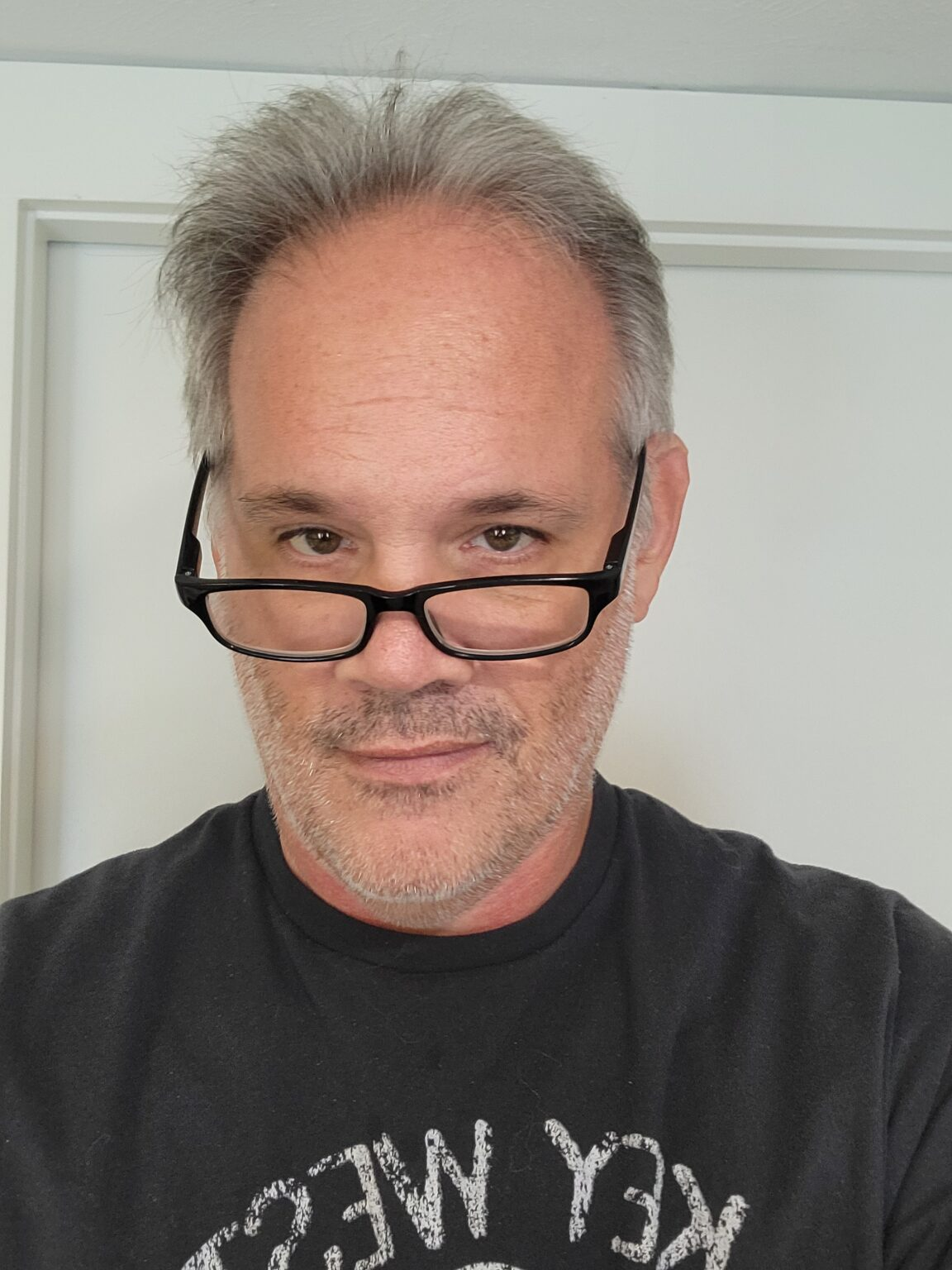
Derek here. Feel free to contact me at derek(at)conchcomplainer(dot)com
The Editor Talks
Just because the editor talks doesn’t mean he has much to say. You be the judge. You have in your sweaty little palms the very first issue of The Conch Complainer. It’s part newsletter, part obsession, and fully caffeinated. If you love reading stories set in tropical climates, you’re in the right place. If you want to read incisive interviews with the dude and dudette’s who create these stories, you’re in the right place. If you wish some glutton for punishment would create a list of all your favorite tropical writers, you’re in the right place. Lastly, if you want a serial found nowhere else in the galaxy that features a mosquito invasion the likes of which Florida has never seen, you’re in the right place. ‘Nuff said. Get started!
10 Questions for Wayne Stinnett
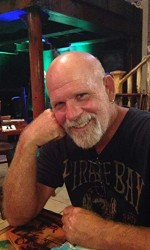
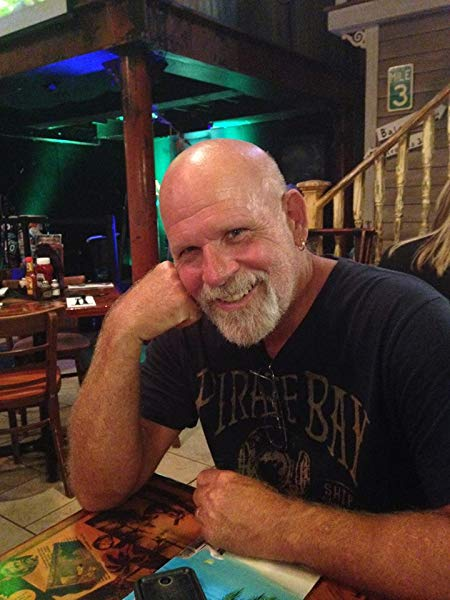
Let’s get the introductions out of the way. We’ve never met the man face-to-face, but here is some background we snagged from his website. Wayne, thanks for taking the time to inform our readers!
Wayne Stinnett is a USA Today Bestselling author of more than thirty novels and one non-fiction book on writing. He’s also a Veteran of the United States Marine Corps, as is his main character, Jesse McDermitt. Between those careers, Stinnett has worked as a deckhand, commercial fisherman, dive master, taxi driver, construction manager, and truck driver, among many other things. He lives with his wife and youngest daughter in the South Carolina Lowcountry, just a few miles from Parris Island, where he went to boot camp. They also have three grown children, four grandchildren, a crazy Carolina dog, and a large cage of parakeets. He grew up in Melbourne, Florida, and has also lived in the Florida Keys, the Bahamas, and Cozumel, Mexico.
That’s enough of that. On to the questions, buckaroos!
Who are you and what’s your background?
My name’s Wayne Stinnett, and my background is so varied it would take volumes to cover everything. I’m a storyteller these days, but up until 2014, I was an over-the-road trucker, specializing in oversized loads. Before that, in the latter part of the twentieth century, I worked in construction, commercial fishing, as a divemaster, taxi driver, deck hand, and I’m a veteran of the United States Marine Corps, just to name a few occupations I draw from in my writing.
Looking back, what advice would you give your younger writing self?
Don’t lose those notebooks! I was sort of a geeky kid, but back then we called them bookworms. I always had a small notebook and pencil in my pocket and would jot down interesting ideas, experiences, and sketches. I’d also advise the younger me to not wait until I was a grandpa to take a serious look at writing.
How do you select the names of your characters?
This is always a challenge. In my first book, I pondered each character’s name carefully, pulling them out of my own mind. In the second one, I asked my Facebook friends if they’d allow me to use their names. Dozens agreed, and when a new character came up, if it was male, I went to the male list of friends, and if female, the female list. Then I found a website called Fake Name Generator, where you can enter things like age, ethnicity, country of origin, and sex, and it would give you a full fake bio. These days, it’s a lot simpler. With over 7,000 followers on Facebook, I just go there, hit page down four times, and pick the first name of the first person that appears. Then I do it again four times, to get the last name.
What type of scene (or even a single scene) is/was the hardest to write?
The death and memorial of my protagonist’s mentor, who is based on a real person. It took a long time to write it, and I went over it dozens more times to make sure I did right by my friend, even though the name of the character was different.
What literary pilgrimages have you gone on?
I just returned from the British Virgin Islands, where my next book will be set. I go to the Florida Keys at least once a year, just to recharge the fiction battery bank. I attend the Novelists, Inc, or NINC conference every September in St. Pete Beach, Florida, and am a regular at the Key West Mystery Fest.
What is your writing kryptonite (what gets in the way of progress, and how do you defeat it)?
Nothing. I don’t believe in writer’s block. What I do believe in is practice, dedication, planning, and self-discipline. Whether I feel like it or not, I sit down and write every morning, five days a week. I start by reading over the previous two writing sessions, editing and making changes as I go. And I don’t stop until there are 1,000 new words in the manuscript. A lot of people who complain about writer’s block add more than that to their social media pages every day. This does two things for me. It gets my mind back into the story, and at the end of the manuscript, I’ve self-edited the whole thing twice.
How do you balance originality versus delivering the goods readers want?
The term ‘jump the shark’ originated from the TV show Happy Days, when Fonzi literally jumped his motorcycle over a tank full of sharks. The show went downhill real fast after that. Each of my books, thirty as of right now, builds on the story of the previous volume, but sometimes the action is ratcheted up and sometimes down. I’m telling the story of a person’s life, spanning over twenty-five years. Having lived in the Florida Keys for a time, as well as Mexico and the Bahamas, I have a wealth of characters for inspiration.
What’s your favorite under-appreciated or mostly forgotten novel?
The Old Man and the Sea comes to mind. I first read it in the late 1960s, and it was nearly twenty years old then. Today, it’s pretty much forgotten with readers seeking more modern adventures and stories.
Who was your biggest writing influence and why did they have such a profound effect?
I was thirteen years old when I read The Deep Blue Good-By by John D. MacDonald. I went on to devour each of those early Travis McGee novels and anxiously awaited the next, until he died in the early 1980s. In 1974, when I turned sixteen and got my driver’s license, my first road trip was from my home in Melbourne, Florida, to Bahia Mar Marina in Fort Lauderdale. As I walked up and down the docks looking for slip F-18 and McGee’s boat, the Busted Flush, I noticed that none of the slips had letters, just numbers. The dockmaster came out and asked what I was looking for. When I told him, he looked down and shook his head sadly, saying, “Travis McGee ain’t real, son.” It was a huge disappointment for a young man to endure. MacDonald’s musings on the overdevelopment of the Florida peninsula, especially the Everglades, are just as relevant today as they were in the 1960s.
Who is your favorite fictional character of all time, encompassing all media, and why?
Travis McGee. After I got out of the Marine Corps, I worked in construction for many years. In the winter, layoffs were typical. I often said I was “taking my retirement in small chunks.” If you’ve read the series, you know what I’m talking about. If you haven’t, do yourself a favor and start with The Deep Blue Good-By. I’m currently on my 7th read-through of the series. I have all twenty-one in paperback, yellowed with age, and dog-eared every other page. Though the writing is dated, the ideas never get old.
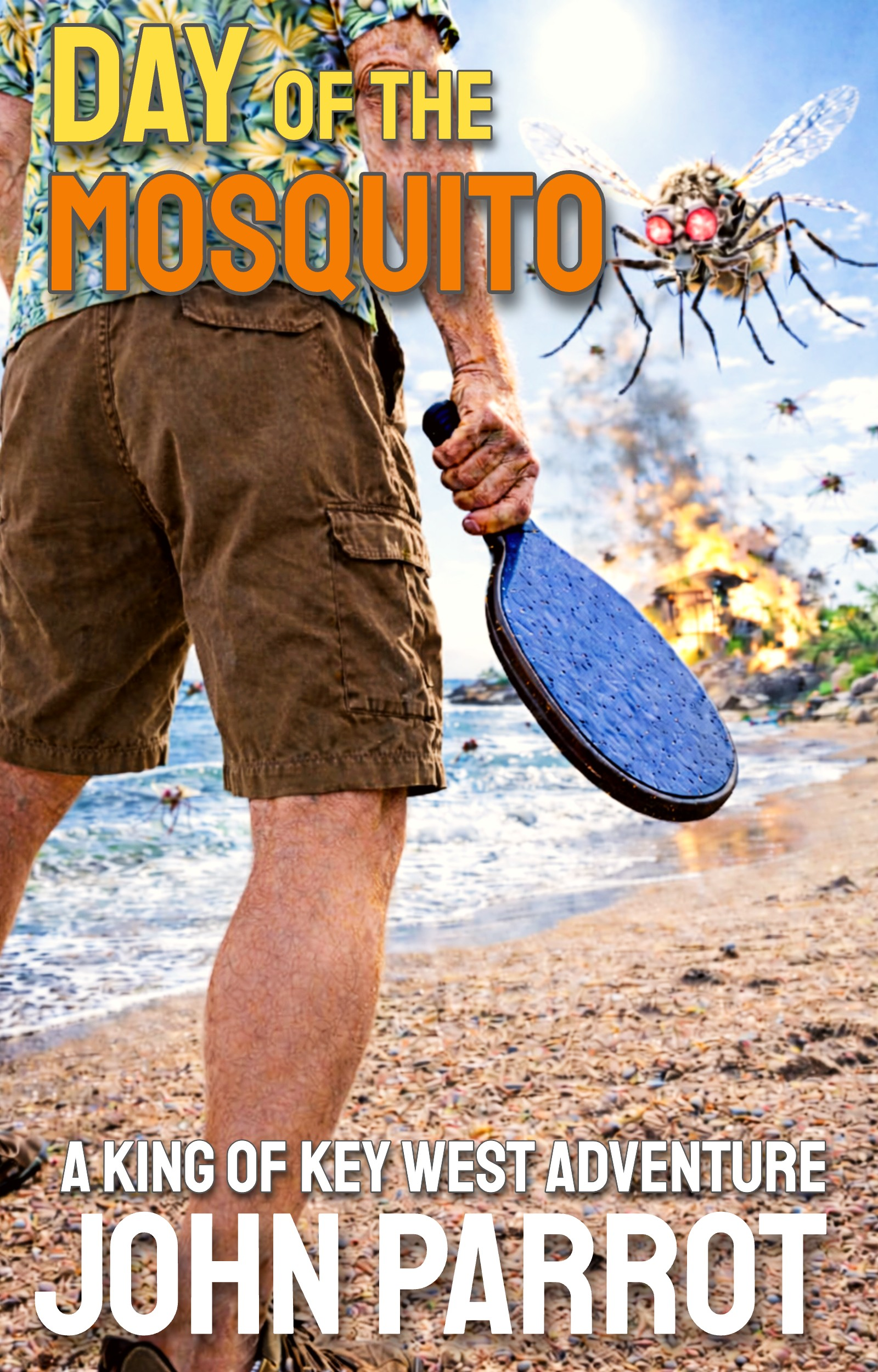
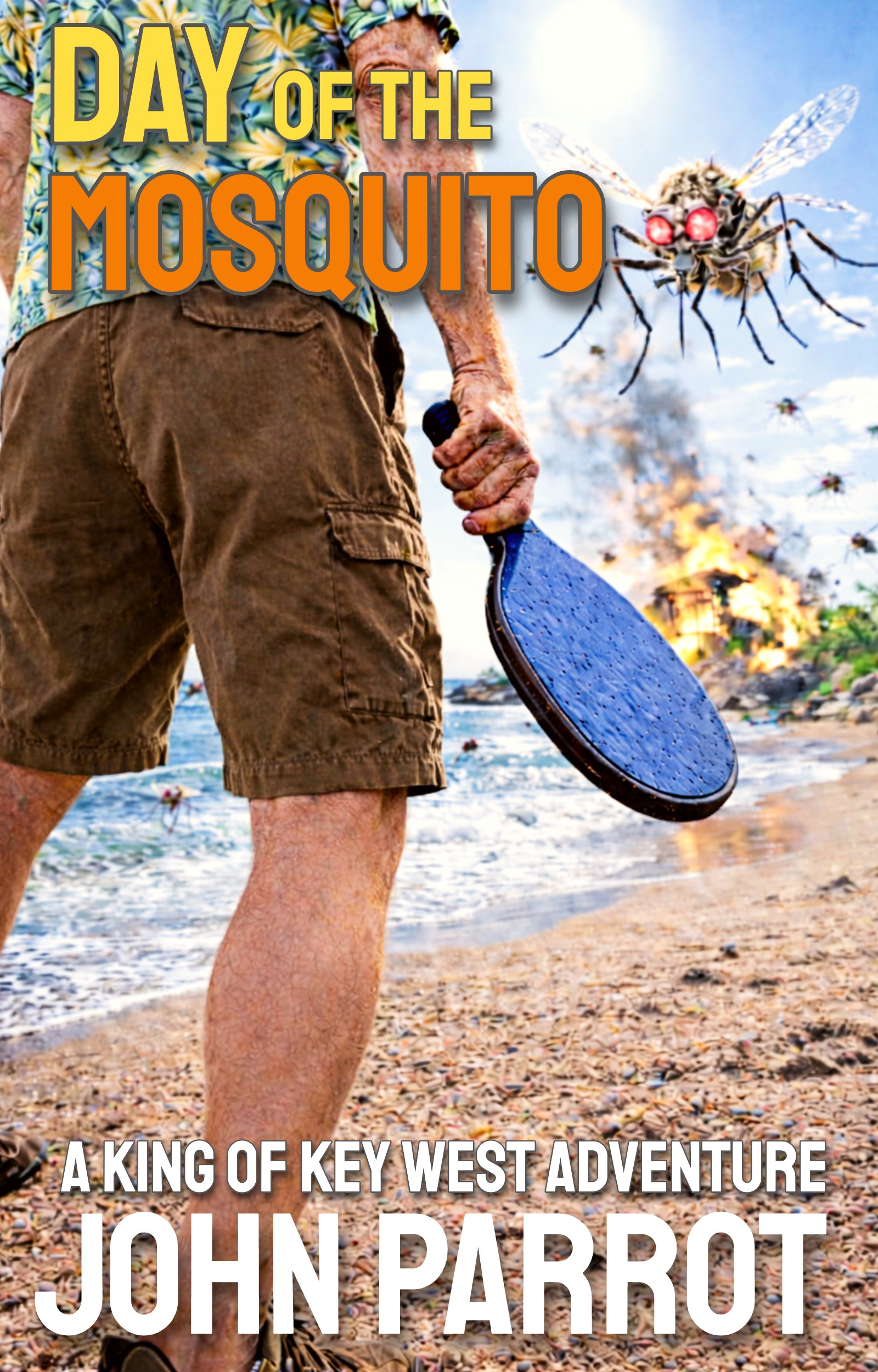
Day of the Mosquito (A King of Key West Adventure)
Serial Episode #1
Havana Harbor
The meeting took place on the sixth floor of the Centro de Investigacion Sanitaria de Regla, even though it officially never happened. Two centuries old, the building’s deterioration had accelerated in the last decade. Not a day went by that it didn’t drop bits of concrete and brick, like an incontinent manatee, on unsuspecting heads. Workers knew to wear a hard hat, keep an eye on the ceiling, and be ready to move quickly.
Thanks to an HVAC system that only blew hot air and could not be turned off, summer was an especially miserable time in the building. An army of whirring box fans worked to exhale the stank of near-extinction-level ammonia floor disinfectant through hand-cranked windows. Heat-laden breezes pushed slightly cooler air through the same windows after a trip over the oily harbor water.
Those who spent much time in the building had long ago experienced a temporary loss of smell that eventually became permanent.
“I trust we’ve all reviewed the project notes.” A towering, rickety, uniformed figure stood at the head of a conference table set for eight. He clutched a folder in one hand, waving it. The small group of politicians, scientists, and bureaucrats nodded politely.
Colonel Ernesto Valdes Marrero tossed the folder on the table.
Drawn by the rustle of papers, a seagull swooped in, stole the folder, and left a pile of shit in its place.
“And that’s why we put screens on the windows,” Colonel Marrero said. He directed the weary comment to one of the bureaucrats, who pretended to write something down. “Now, if I can have everyone sign your copy, we’ll get this mission underway.”
A cigarette-hardened voice, whiskey and gravel, cleared her throat to speak. Dr. Beatriz Molina Rios, Chief Entomologist of the State Biosecurity Institute, sat on one side of the table. She tapped the piece of paper in front of her. “There seem to have been some changes we weren’t notified about.”
“Minor changes,” Marrero said.
“Yes, they’re actually not.” The rest of the group stopped scribbling signatures, seeing that Dr. Rios’ pen had not moved. “Someone switched out Lot A and inserted Lot X.”
Marrero leaned forward, placing his knuckles on the table, careful to avoid the aviary excrement. He gazed at the doctor, all innocence and kindness. “It’s all mosquitos. All the same.”
Rios shook her head. “Again, they actually aren’t. As I’m sure you’re aware, Lot A cannot reproduce. Lot X, well…” The doctor took a long drag on her cigarette and snubbed it out on the table. “…is something else entirely, and should have been destroyed long ago.”
“I’ve discussed all of this with the Prime Minister and, as you can plainly see, he signed off on the whole idea from soup to nuts.” Marrero surreptitiously picked his nose and made a flicking motion behind his back.
“About that.” Rios held up a sheet of paper. “The Prime Minister’s signature looks shockingly similar to a computer font called Awesome Wayne.” She leaned back and lit another cigarette, secure in her value as the nation’s leading bioweapons mind. “Do you think we are children who can be fooled so easily? I’d like to talk to him personally before I sign anything.”
Emboldened by the doctor’s pushback, murmurs of support echoed from around the table. Though he was under strict orders from the Prime Minister not to shoot anyone, Marrero drew his silenced sidearm, a Soviet Makarov and dispatched everyone in the room except the lowest ranking bureaucrat, a sniveling rat of a man who seemed to have been cast in concrete in his chair.
“Well,” Marrero said, pistol pointed at Alberto. “I’m sure you’ll agree this was all self-defense.”
***
The building hung over water, which allowed boats of a certain size to enter and leave without notice. CaribeX Logistics made its money delivering packages to and from the sketchy locations that most companies avoided like the plague. Places like Iran, Russia, North Korea and, of course, Cuba.
Colonel Marrero arrived at the basement dock with Alberto trailing behind, carrying a beachball-sized package. Bare lightbulbs provided enough light to see. The ceiling dripped from bad plumbing and condensation. Diesel engines chugged on a small shrimp boat moored nearby.
Marrero headed for it. A man met him. Tall, clean-shaven, muscular. He looked like he could spend his spare time crushing sand into diamonds with his bare hands. The colonel gestured. Alberto handed the package over. “You have everything you need?”
The man clicked his heels and brought out a cell phone with military precision. “Coordinates locked and loaded. Destination Rockland Key. A Momo Bigelow will take delivery.” The faux shrimper shook the box, like a kid at Christmas, then put his ear to it.
“Stop, you idiot!” Colonel Marrero screeched. “You don’t want to get them angry.”
“Them?”
“It. Never mind. You shouldn’t shake boxes that you don’t know what’s inside.” The colonel handed over a pack of currency. “One hundred grand, and get a signature.”
The man stared. “We don’t do that. You need a signature, call FedEx.”
The Cubans each took a step back as the man threw off the lines and eased the boat out from under the building. Alberto’s foot missed the dock entirely and he splashed down in the middle of an oil slick. Colonel Marrero ignored the subsequent splashing and screaming as he set the countdown feature on his watch to twenty-four hours.
“Take that, yankee scum,” he muttered, headed for the cafeteria as Alberto’s cries grew fainter behind him. He’d had a busy day already, and it wasn’t even lunch time.

Derek here. Feel free to contact me at derek(at)conchcomplainer(dot)com
The Big List
Just because the editor talks doesn’t mean he has much to say. You be the judge.